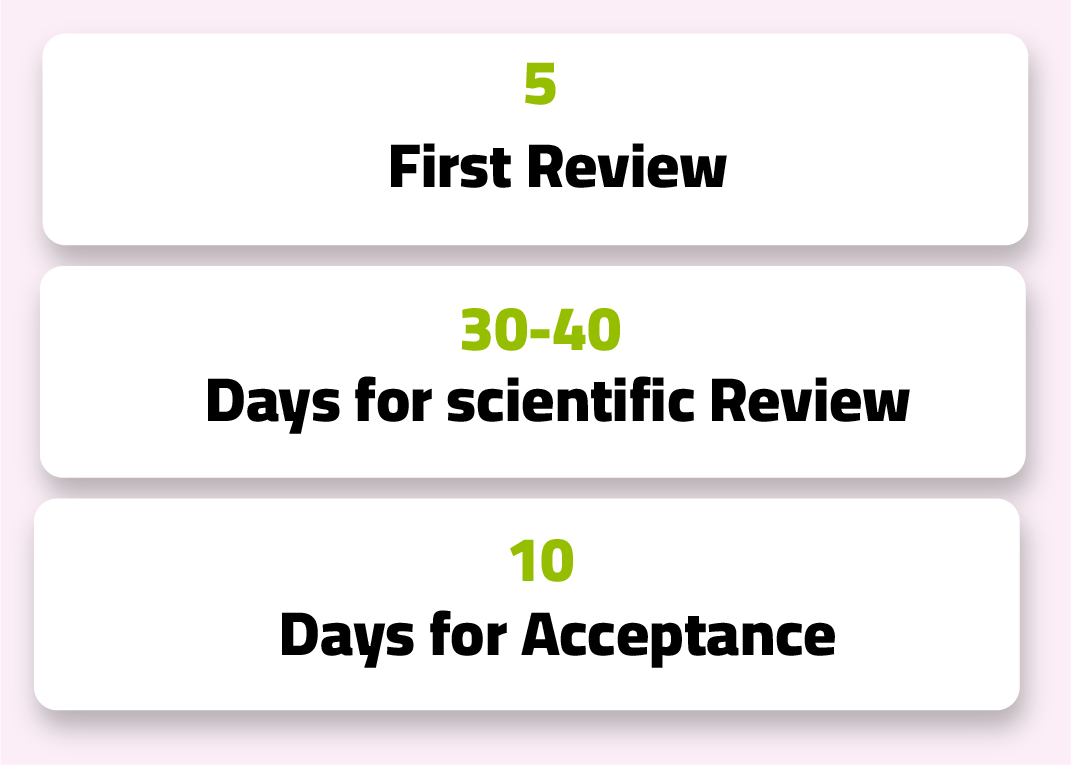
Manuscript Publication Procedure
Al-Fath Journal for Educational and Psychological Research follows clear and organized procedures for receiving, screening, reviewing, and publishing manuscripts, ensuring transparency, fairness, confidentiality of peer review, and adherence to publication ethics.
First: Manuscript Submission
Manuscripts must be submitted exclusively through the journal’s approved online submission system available on its official website. Authors must attach all required documents, including the manuscript file, originality declaration, authors’ information, and any other documents required by the journal.
The Managing Editor or the authorized editorial staff checks the completeness of the initial submission requirements and verifies that the manuscript falls within the scope of Al-Fath Journal for Educational and Psychological Research and is related to education, psychology, or their related disciplines.
Second: Initial Editorial Screening
Submitted manuscripts are reviewed by the Editorial Board or the assigned editor for initial screening. This includes checking the relevance of the manuscript to the journal’s scope, compliance with author guidelines, scientific structure, clarity of title and abstract, appropriateness of methodology, and completeness of authors’ information, references, tables, and figures.
The Editorial Board reserves the right to reject a manuscript before peer review if it falls outside the journal’s scope or does not meet the minimum requirements of scholarly originality, methodological quality, language quality, or publication ethics.
Third: Plagiarism and Similarity Check
All submitted manuscripts are subject to plagiarism and text-similarity screening using Turnitin or any other software approved by the relevant official authorities before being sent for peer review.
The journal does not rely solely on the numerical similarity percentage when evaluating a manuscript. The Editorial Board reviews the similarity report and analyzes the nature, source, extent, documentation, and effect of similarity on the originality of the manuscript. If excessive or unjustified similarity is detected, the manuscript may be returned to the author for revision and proper documentation, or rejected if serious plagiarism is confirmed.
Fourth: Selection of Reviewers
After passing the initial screening and similarity check, the Editorial Board nominates reviewers specialized in the manuscript’s subject area, taking into consideration their specific expertise, scientific competence, impartiality, and the avoidance of conflicts of interest.
Manuscripts are sent to qualified scientific reviewers in accordance with the journal’s approved peer-review policy. The journal maintains the confidentiality of reviewers’ and authors’ identities according to its adopted review system.
Fifth: Peer Review
Reviewers evaluate the manuscript in terms of originality, scholarly significance, methodological soundness, accuracy of findings, quality of discussion, relevance and currency of references, language clarity, and compliance with the journal’s guidelines and publication ethics.
Reviewers are requested to submit clear and constructive scientific reports within the timeframe specified by the journal as far as possible. If a reviewer declines the invitation or is delayed, the Editorial Board may appoint an alternative reviewer to avoid delaying the publication process.
Sixth: Reviewers’ Reports
After receiving reviewers’ reports, the Editorial Board examines them and makes one of the following decisions:
1 . Accept the manuscript for publication without major revisions.
2 . Accept the manuscript after minor revisions.
3 . Return the manuscript to the author for major revisions and possible re-evaluation.
4 . Reject the manuscript as unsuitable for publication.
Reviewers’ comments are sent to the author in a professional manner while maintaining the confidentiality of reviewers’ identities.
Seventh: Revisions and Re-evaluation
The author must complete the required revisions within the period specified by the journal and submit a revised version of the manuscript together with a response explaining how the reviewers’ and editors’ comments were addressed.
The Editorial Board or assigned editor reviews the revised manuscript to ensure that the required changes have been made. When necessary, the manuscript may be returned to the reviewers to confirm the adequacy of the scientific and methodological revisions.
Eighth: Final Decision
The Editorial Board makes the final decision regarding acceptance or rejection based on reviewers’ reports, the author’s response to the required revisions, and the manuscript’s compliance with the journal’s guidelines and publication ethics.
The corresponding author is notified of the final decision through the journal’s online system or the approved official email.
Ninth: Language and Technical Editing
After acceptance, the manuscript undergoes language, technical, and editorial editing, including language review, formatting of tables and figures, checking of references, and ensuring conformity with the journal’s template and publication requirements.
Language and technical editing shall not alter the scientific content of the manuscript except in coordination with the author when necessary.
Tenth: Publication
After completing all scientific, editorial, and technical requirements, the accepted manuscript is scheduled for publication in the appropriate issue according to the order of acceptance, completion of publication procedures, and the journal’s issue publication policy.
Accepted articles are published electronically through the journal’s official website and made available to readers in accordance with the journal’s open access policy and adopted license.
Eleventh: Record Keeping and Confidentiality
The journal maintains records of submission, screening, peer review, and editorial decisions within its online system or administrative archive, while preserving the confidentiality of authors’ and reviewers’ data and all correspondence related to submitted manuscripts.